
What Size Dumpster Do I Need?
Written by the Owensboro Roll-Off Pros team, based on sizing calls we handle every week across Daviess County.
This is the single most common question in the dumpster rental business, and it’s also the easiest one to get wrong. Guess too small, and you’re paying for a second delivery. Guess too big, and you’ve paid for space you never used. Neither mistake is expensive on its own, but both are avoidable once you understand how sizing actually works.
Quick answer: most single-room cleanouts and garage cleanouts need a 10 or 15 yard dumpster. Most kitchen or bathroom remodels and roofing jobs need a 20 yard. Whole-house cleanouts and new construction usually call for a 30 yard. Major demolitions and large commercial jobs need a 40 yard. The table below breaks this down by project, and the rest of this guide explains why, and what actually changes that answer for your specific project.
| Project Type | Recommended Size |
|---|---|
| Garage, attic, or basement cleanout | 10 or 15 Yard |
| Bathroom remodel | 10 or 15 Yard |
| Kitchen remodel | 20 Yard |
| Roofing tear-off | 10, 15, or 20 Yard (weight-dependent) |
| Whole house cleanout or move | 30 Yard |
| New construction or major renovation | 30 Yard |
| Large demolition or commercial job | 40 Yard |
How Dumpster Sizes Actually Work
Dumpster sizes are measured in cubic yards, the amount of space inside the container. One cubic yard is a 3 foot by 3 foot by 3 foot cube, 27 cubic feet. A 10 yard dumpster holds 10 of those cubes, or 270 cubic feet total.
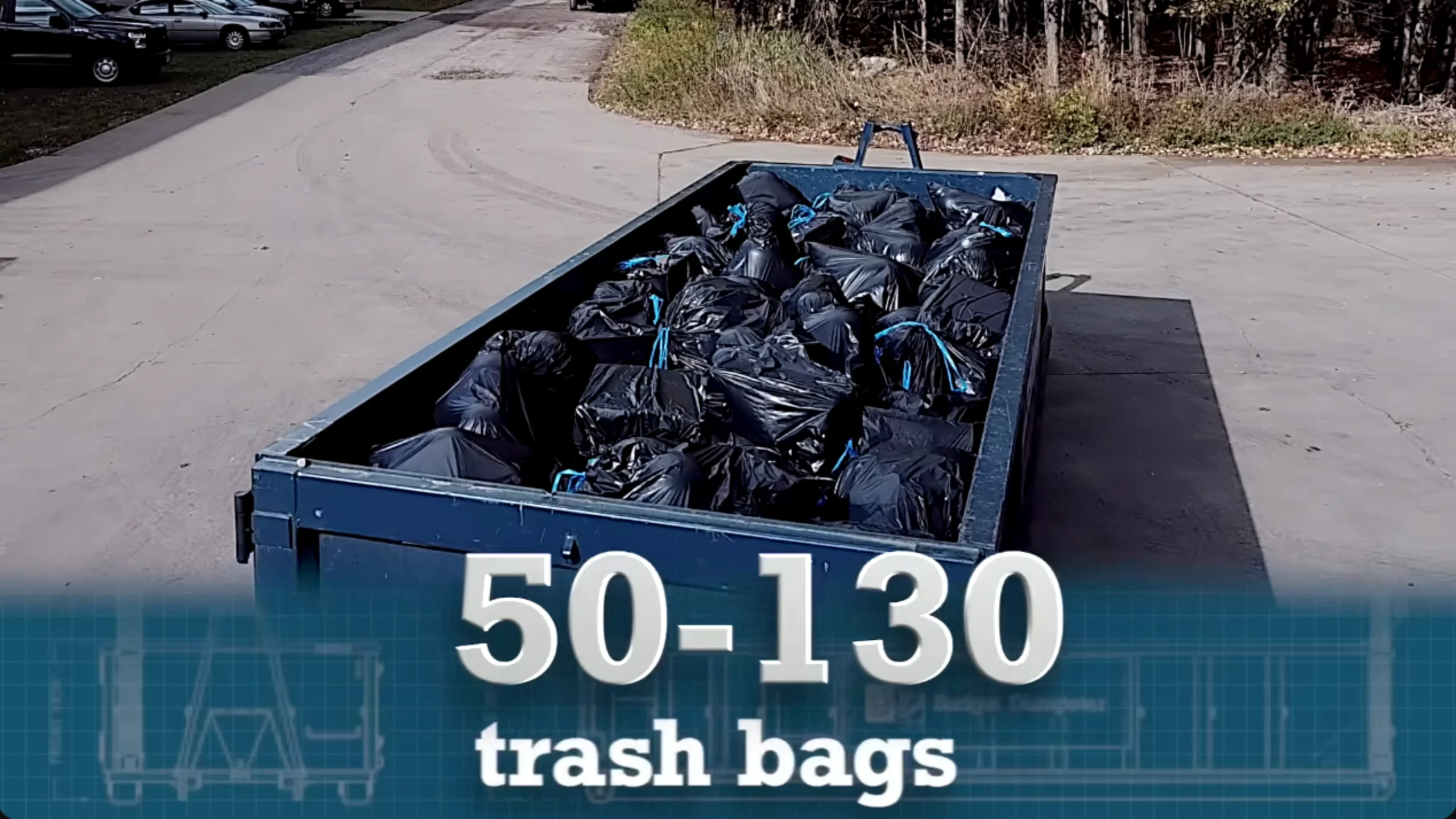
The easiest way to picture this is in pickup truck loads, since most people have a rough sense of what that actually looks like:
| Dumpster Size | Roughly Equal To |
|---|---|
| 10 Yard | 3 to 4 pickup truck loads |
| 15 Yard | 4 to 5 pickup truck loads |
| 20 Yard | 6 to 8 pickup truck loads |
| 30 Yard | 9 to 12 pickup truck loads |
| 40 Yard | 12 to 16 pickup truck loads |
That comparison matters more than the raw cubic yard number for most people, since almost nobody has an intuitive sense of what 270 cubic feet actually looks like sitting in a driveway.
Weight vs. Volume: The Part Most Guides Skip Over
Most sizing advice stops at “how much space do you need.” That’s only half the answer, and it’s the half that gets people into trouble.
Every dumpster has two limits: how much it can physically hold, and how much it’s allowed to weigh. For light debris like furniture, clothing, and household junk, volume is usually the limiting factor, you’ll run out of room before you’re anywhere close to the weight cap. For dense materials like shingles, concrete, tile, brick, and dirt, weight becomes the limiting factor first, often while the dumpster still looks half empty.
This is why “what size dumpster do I need for a roofing job” and “what size dumpster do I need for a garage cleanout” aren’t answered the same way, even if both projects might physically fill the same amount of space. A 20 yard dumpster full of shingles can weigh two to three times what a 20 yard dumpster full of furniture and boxes weighs.
The practical takeaway: tell the company what you’re actually disposing of, not just how much of it there is. Material type changes the right size as much as volume does, sometimes more.
Dumpster Size by Project Type
What Size Dumpster Do I Need for a Garage, Attic, or Basement Cleanout?
A 10 or 15 yard dumpster covers most single-space cleanouts. These jobs are usually volume-limited, not weight-limited, old furniture, boxes, sports equipment, and general clutter don’t weigh much relative to how much space they take up. Most garage cleanouts stay well under the 1.5 to 2 ton weight allowance that comes with these sizes, even when the container looks full. If the space is unusually packed or includes heavy items like old exercise equipment or a filing cabinet full of paper, size up to the 15 or 20 yard to stay safe.
What Size Dumpster Do I Need for a Bathroom or Kitchen Remodel?
A bathroom remodel and a kitchen remodel look similar on paper but behave differently in a dumpster. A bathroom generates less material overall, drywall, tile, an old vanity, maybe a tub, and a 10 or 15 yard usually handles it. A kitchen generates more volume and more weight, cabinets, countertops, flooring, sometimes appliances, and a 20 yard is the safer default. A 20 yard’s roughly 3 ton weight allowance usually covers a kitchen comfortably, but stone countertops or a full cast-iron tub can push a smaller project closer to that limit than the volume alone would suggest.
What Size Dumpster Do I Need for a Whole House Cleanout or Move?
For clearing an entire home, whether it’s a move, an estate cleanout, or prepping a property for sale, a 30 yard dumpster is the standard choice. This size handles the volume of a full house without needing a second delivery partway through, which almost always costs more than just booking the bigger size from the start. A 30 yard’s roughly 4 ton weight allowance comfortably covers most whole-house cleanouts too, since furniture and household items are relatively light for how much space they take up.
What Size Dumpster Do I Need for a Roofing Job?
Roofing is the clearest example of weight beating volume. A standard single-layer tear-off on an average home typically runs 2 to 4 tons, and a second layer of old shingles roughly doubles that. Because of this, bigger isn’t automatically better for roofing, a 10 or 15 yard weight-rated correctly often makes more sense than a 30 or 40 yard that you’d never be able to fill before hitting the weight limit. This is specific enough that it deserves its own explanation, our roofing dumpster guide breaks down the exact math by roof size and shingle type.
What Size Dumpster Do I Need for New Construction or a Major Renovation?
Framing scraps, drywall, packaging, and general job site waste add up fast on a new build or a full-home renovation. A 30 yard keeps most job sites clear from start to finish, with a swap out mid-project if the job runs long. A swap is a normal, planned part of a longer job, but it’s worth confirming the swap rate when you book, not assuming it’s automatically included in your original price. Our guide on avoiding hidden dumpster fees covers exactly what to ask before you’re mid-project and surprised by a charge. Larger commercial builds or major demolitions often call for a 40 yard instead.
What Size Dumpster Do I Need for Concrete, Dirt, or Heavy Debris?
These materials are dense enough that a standard dumpster’s weight limit becomes the deciding factor almost immediately, regardless of size. Concrete alone weighs roughly 4,050 pounds per cubic yard, meaning even a modest amount fills a container’s weight allowance long before it fills the physical space. A 10 or 15 yard dumpster can often hit its weight cap while still looking mostly empty. If your project involves a meaningful amount of concrete, brick, or dirt, mention it specifically when you call so the size and weight allowance actually match what you’re hauling.
Not Sure Yet? Call Before You Book
If you’re still weighing two sizes against each other, that’s exactly the kind of question a two-minute phone call answers faster than any guide can. Call Owensboro Roll-Off Pros at +1 (270) 368-3006 and describe the project, we’ll tell you the size and the real price before you commit to anything.
When in Doubt, Size Up
If you’re genuinely unsure between two sizes, the safer choice is almost always the bigger one. Ordering a second dumpster because the first one filled up costs more than the price difference between sizes would have, and it also means a delay while you wait for the swap. A dumpster that’s a little larger than you strictly needed is a minor inefficiency. A dumpster that’s too small is a real interruption to your project.
How Do I Know What Size I Need If I’m Not Sure?
Describe the project honestly when you call, room count, project type, and whether you’re dealing with anything unusually heavy. A company that sizes dumpsters regularly can usually get you within one size of correct based on that description alone, and the final call should always be a conversation, not a guess made alone on a website.
More Help Getting the Right Size
Size isn’t the only decision. Where the container sits, how much clearance the delivery truck needs, and whether your driveway can handle it all affect which size actually works for your property. That’s a big enough topic on its own, our guide on getting a dumpster delivered covers driveway clearance, placement, and what the truck actually needs to do its job.
Sizing Questions, Answered Directly
Ready to lock in the right size? Call Owensboro Roll-Off Pros at +1 (270) 368-3006 and tell us about your project. We’ll confirm the size and price before anything gets delivered.